
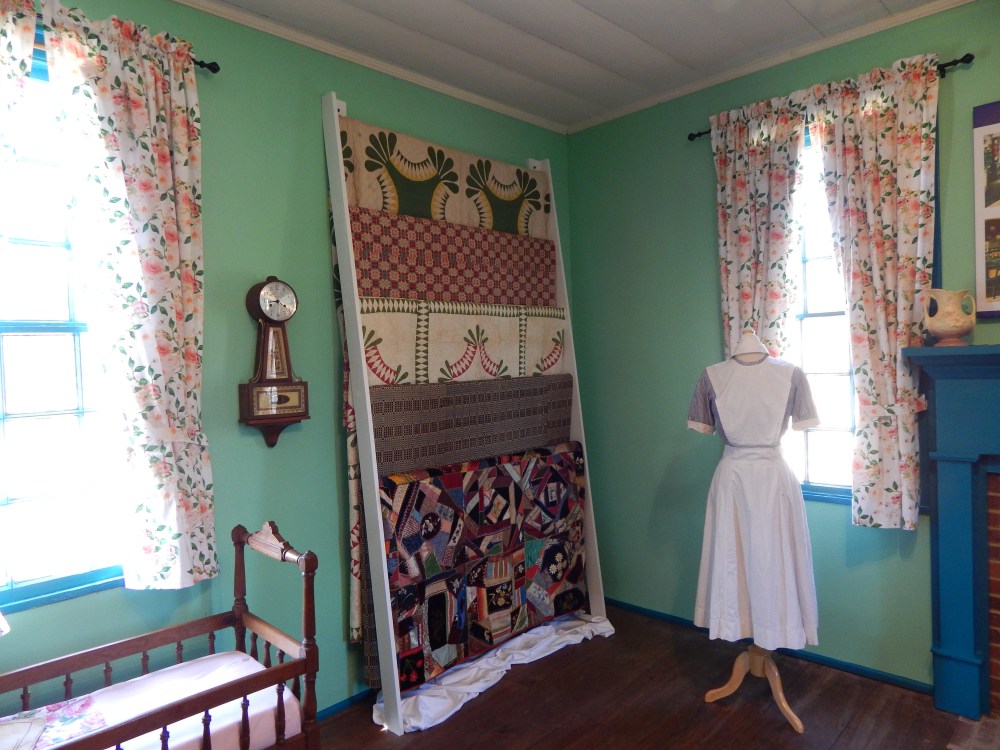
Bedrooms were also colorful in most homes, using bright fabrics and paint. Family quilts, like the ones on display, were handed down through the family generations.

Fabric, paint and linoleum were the available tools for interior decorating during the war. Rationing made other items such as new furniture unavailable for many consumers. People usually choose bright colors to make their homes more cheerful during tough times.
Bright bold wallpaper was often used to paper one wall in a living room. Furniture was usually recovered in new fabric rather than being replaced. Sometime pieces would be repurposed, for instance a baby changing table being converted into a ladies dressing table for makeup and hair. Even bathrooms had bold colors such as kelly greens mixed with canary yellows.
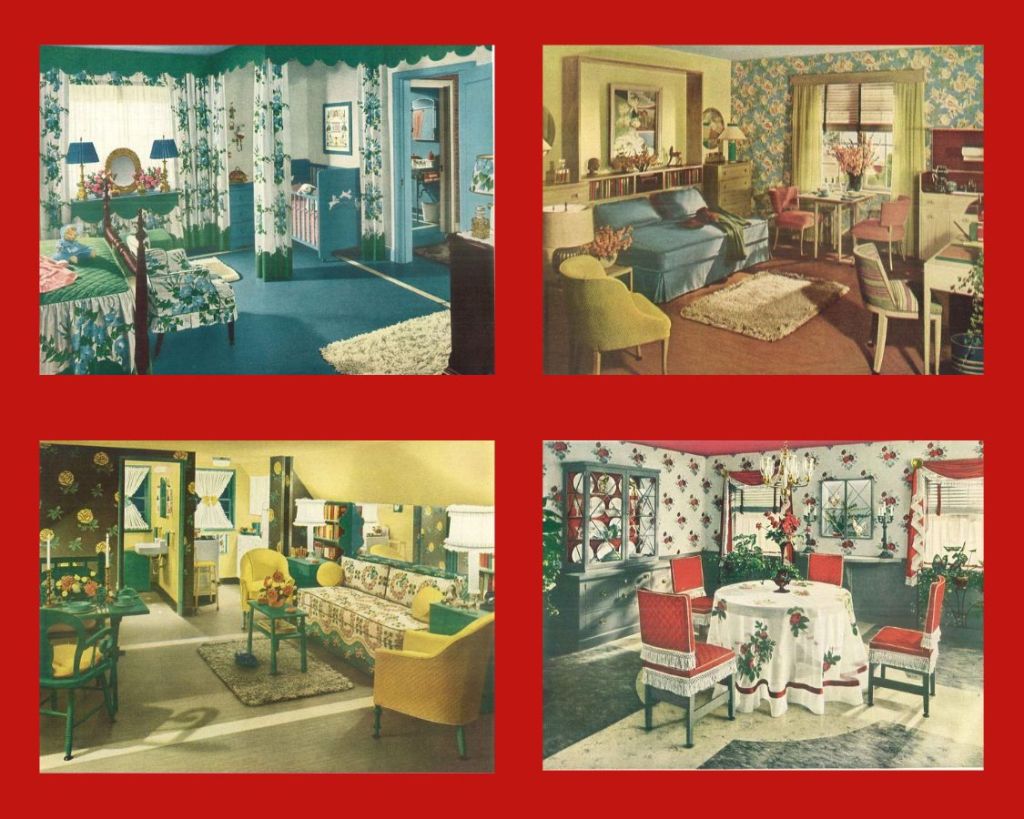
According to Hazel Dell Brown, a well known interior decorator at that time, the only rule was to pick out a color palate before starting your decorating. Women would often write her with drawings of their home interiors asking for her advice. She would encourage stenciling furniture and cabinets to add inexpensive design elements.

The volunteer nurses uniform was worn by women during the war who volunteered in local hospitals to work with the returning soldiers who had been injured in the war.
 “Thomaston Goes to War on the Homefront”