Kitchen and Breakfast Area
Kitchens in the 1940s used bright colors and fabric patterns. We are depicting a kitchen for a family of 5 people, including a baby.
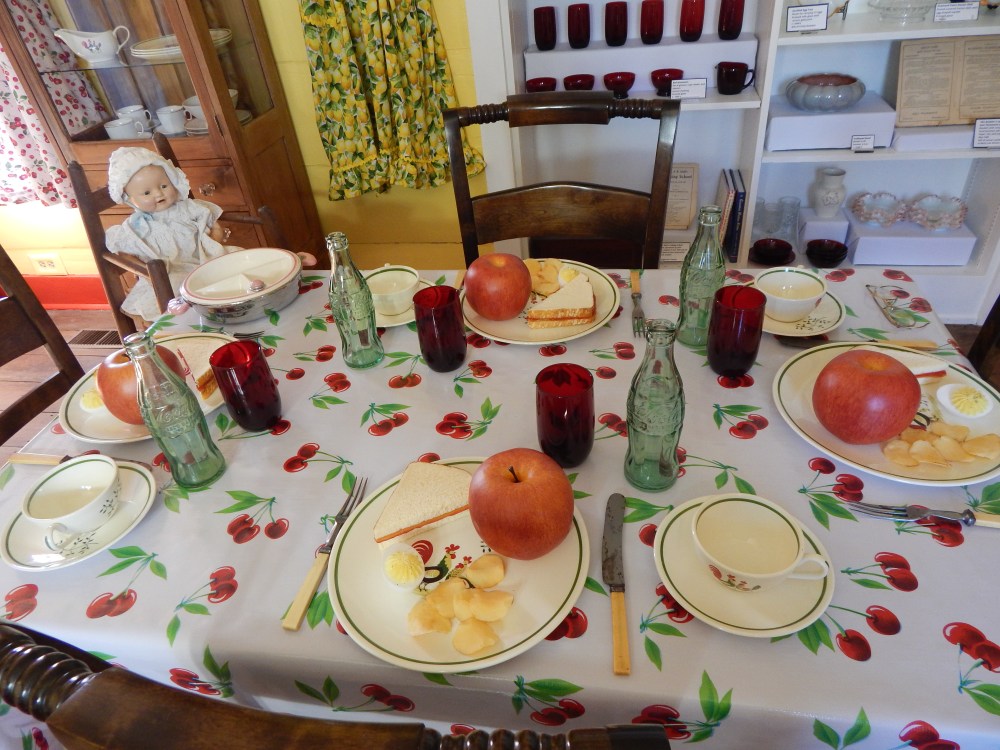
Many of the foods made popular by the military became popular and were served at home. For example potato chips and peanut butter and jelly sanwiches. The coca colas were bottled at a plant in Thomaston. The dishes depict a rooster which was very popular in the 1940s. The tableware handles were made from bakelite and the tablecloth is an oilcloth.
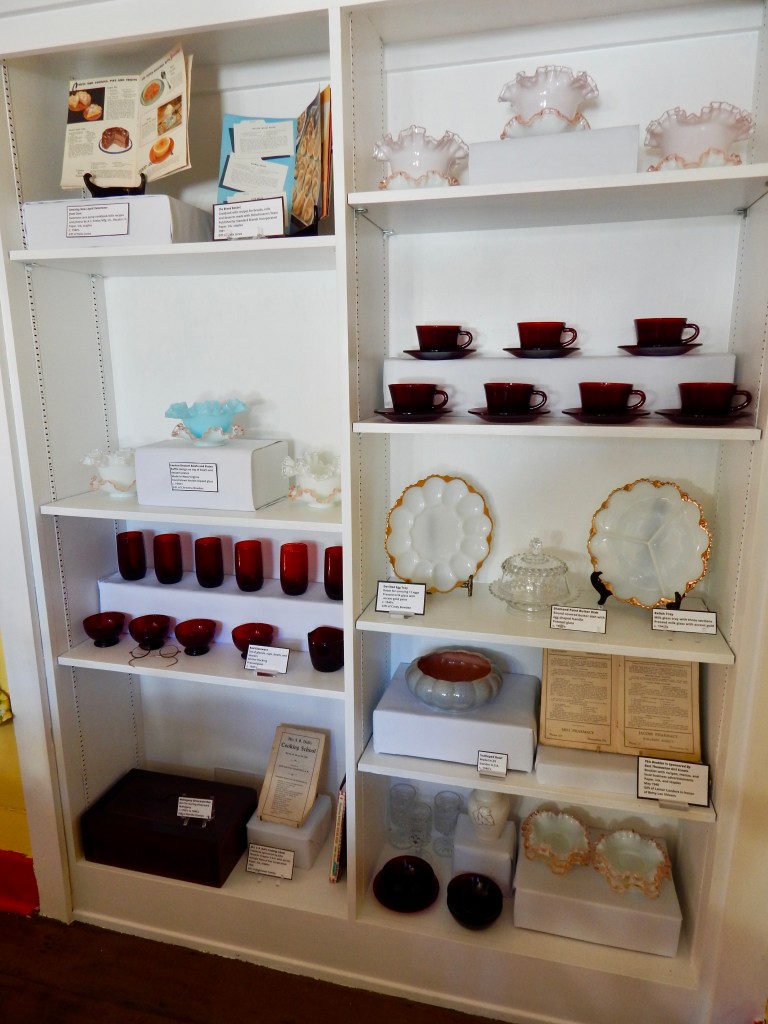
Ruby Red Anchor Hocking glasses in the house were used for everyday. The cabinets behind the table feature Fenton handblown glass, made in West Virginia. The milk glass, another popular inexpensive glass, trays have gold colored edges. The cookbooks on display were from Thomaston and include ads from local merchants as well as popular 1940s recipes. The baby dish had divided ceramic tops which fitted on top of a metal base. They poured hot water into the base to keep the baby food warm.
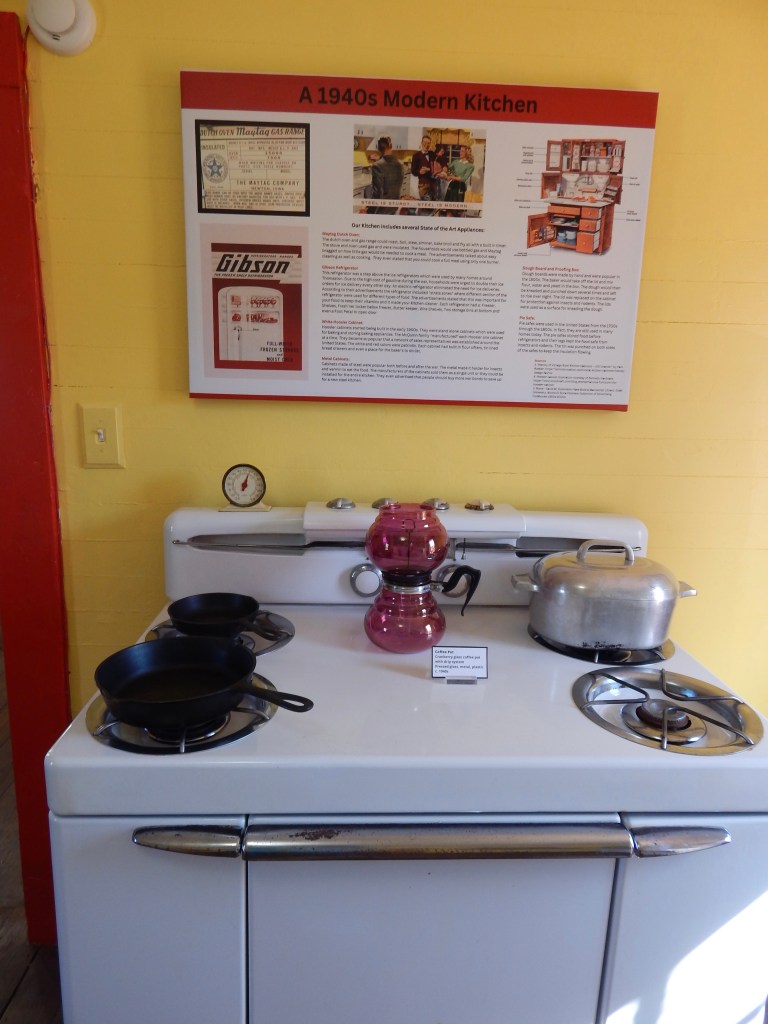
The Dutch Oven stove was made by Maytag and represented the latest in technology. The dutch oven and gas range could roast, boil, stew, simmer, bake broil and fry all with a built in timer. The stove and oven used gas and were insulated. The households would use bottled gas and Maytag bragged on how little gas would be needed to cook a meal. The advertisements talked about easy cleaning as well as cooking. They even stated that you could cook a full meal using only one burner. The cranberry glass coffee pot, in the back top, was for making drip coffee using filters.

The kitchen features a Gibson refrigerator which used electricity instead of ice to keep the food cold. It even has a small freezer and 2 vegetable bins. We also display a Hoosier Pantry, above, with a built in flour sifter, a dough board and a pie safe. All of the kitchen appliances originated during and before the 1940s. Due to the rationing the housewives would try to stretch their food coupons
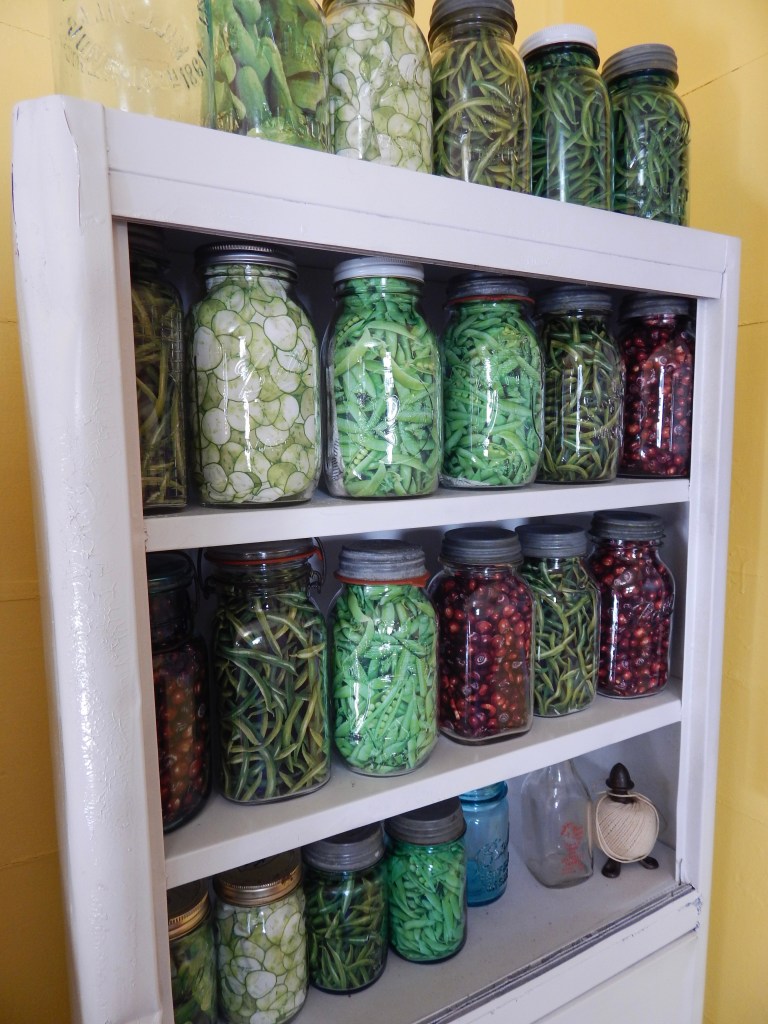
The housewives canned their vegetables from the Victory Gardens and local farms produce. Home canning was done using mason jars and the vegetables were then ready to heat for their winter meals.
 “Thomaston Goes to War on the Homefront”